




















Solutions for healthcare

    Intelligent Communication for Better Patient Care

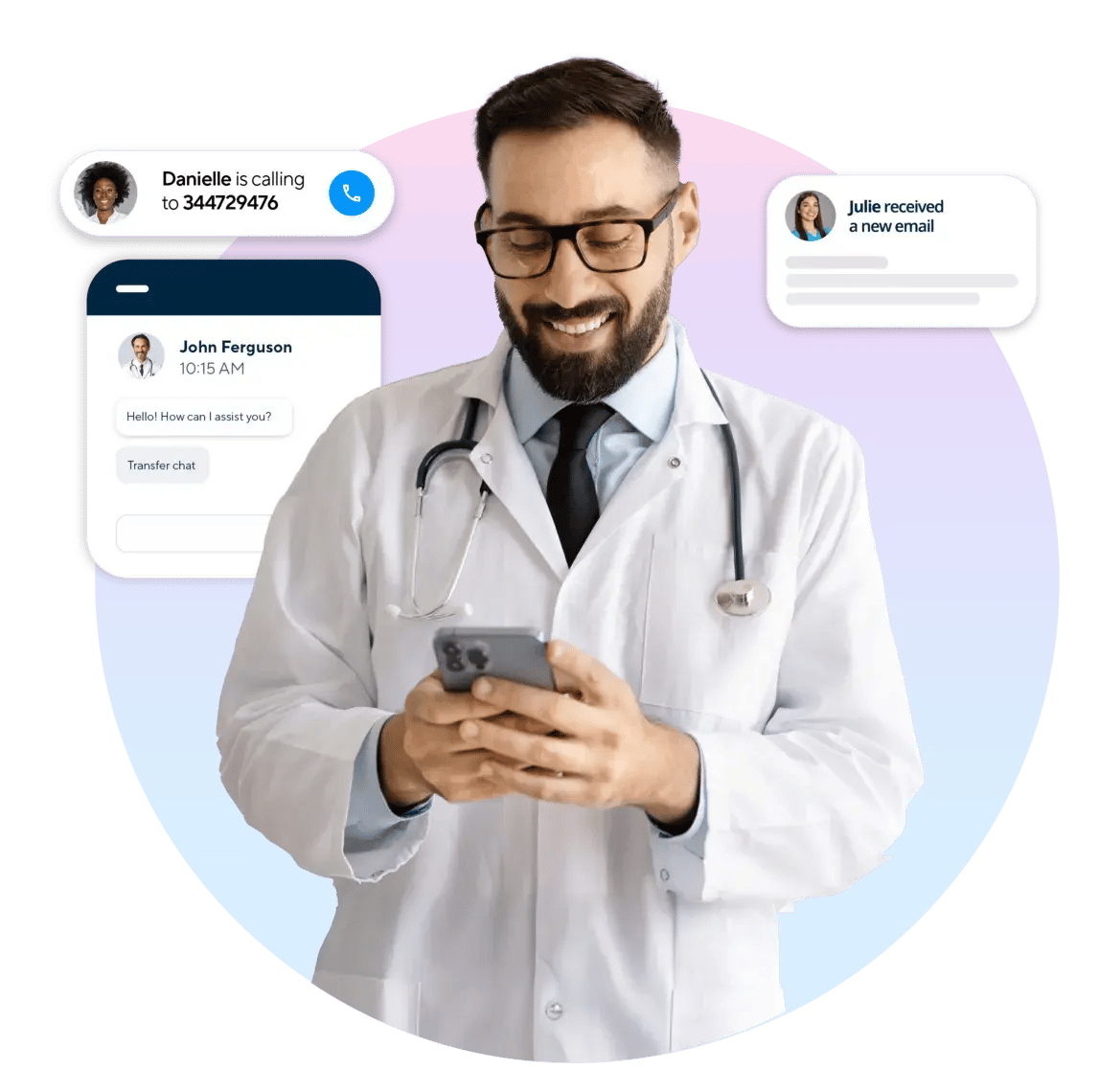
    Reduce patient wait times and connect your team with a HIPAA-compatible phone system that's built for healthcare's demands.

    Book A Demo See Plans & Pricing
    Helthcare communications solutions

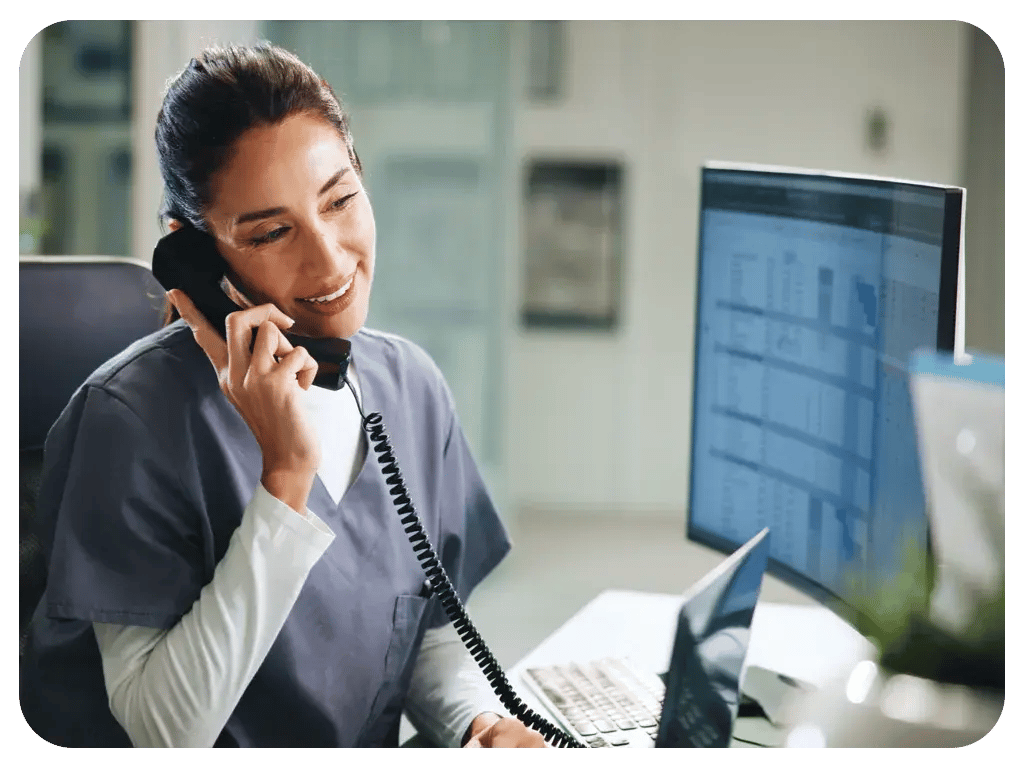
    Eliminate Hold Times And Call Abandonment

    Route Calls Automatically to Departments

    Keep Your Practice Running From Anywhere

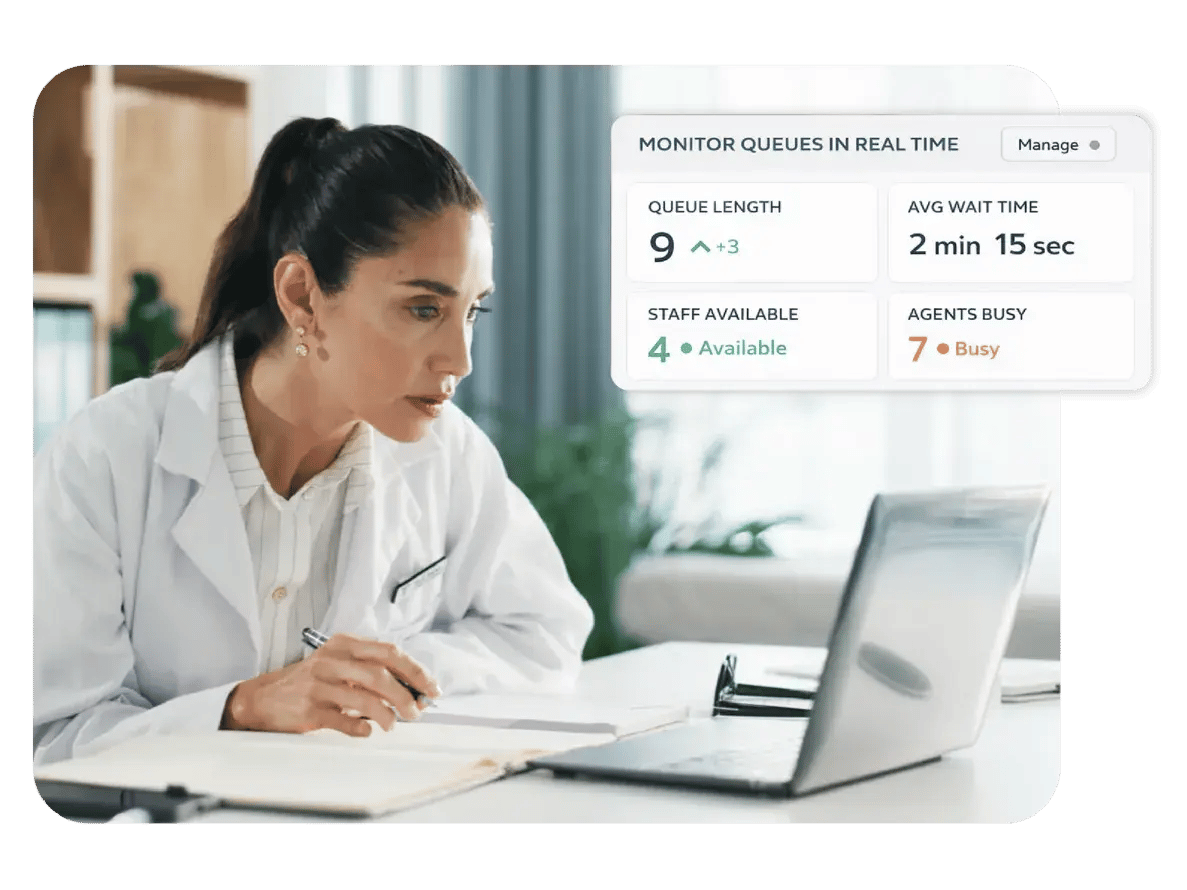
    See Exactly Where Patient Calls Get Stuck

    Trusted by

    Healthcare Organizations

    Cascade logo
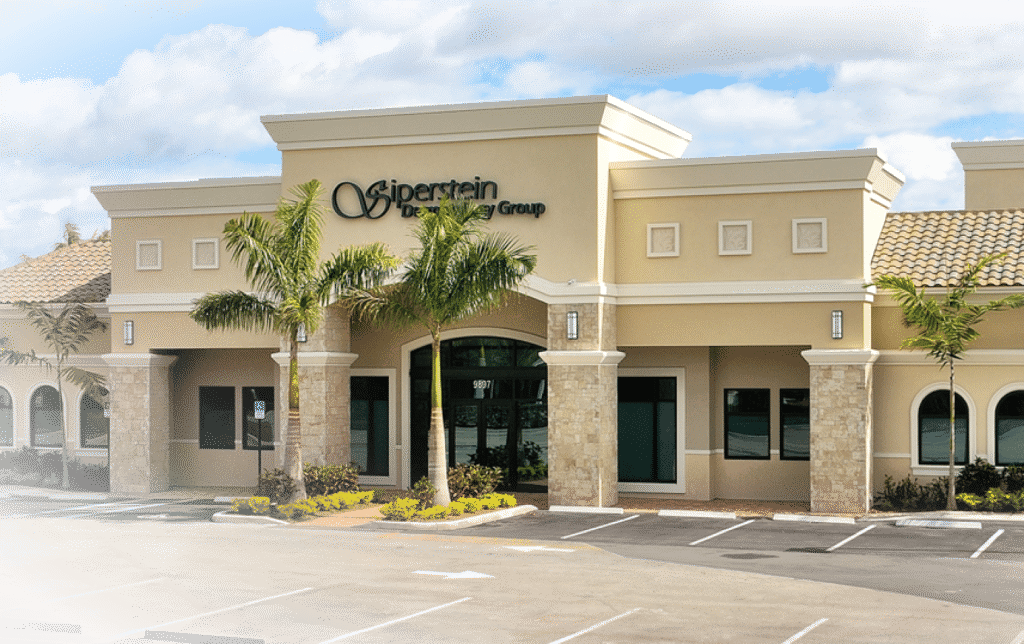
    Siperstein logo
    ncg Care logo
    Kennebec logo
    Jack Houston logo
    Crystal lake logo
    Ciena logo
    Communcaire logo
    Сoast detnal logo
    Unified Team and Patient Communications

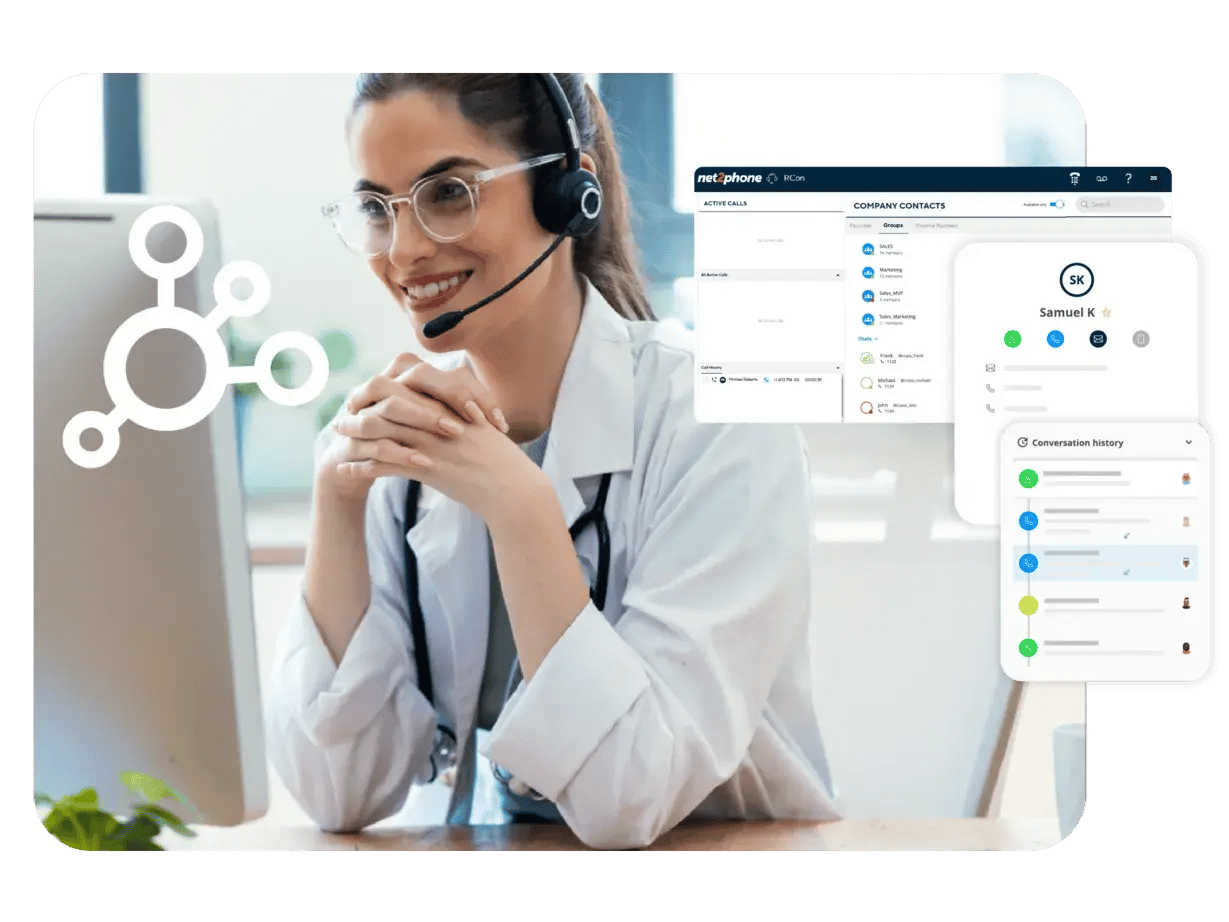
    Handle all Staff and Patient Communication From
    One Platform

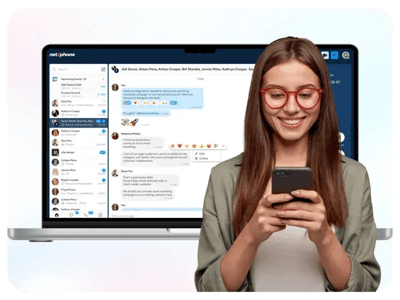
    Voice, video, and messaging work from one platform so you can coordinate care without switching systems.

    Intelligent Call Management

    Reduce Wait Times and Get Patients to
    the Right Outcome Fast

    Smart routing and queue management handle the work, so your patients reach the right department without the wait.

    Built For HIPAA Compliance

    Enterprise-Grade Encryption

    All data and communications are encrypted in transit and at rest.

    Encrypted Virtual Fax

    Send records and referrals securely without physical machines.

    Visibility and Control

    Audit trails log every interaction. Access is restricted by role.

    BAA Available

    Business Associate Agreement available. SOC 2 Type II certified.

    Integrate With Your EHR and Business Tools

    Connect your EHR through Zapier integrations or open APIs. Click to call from patient records, trigger appointment reminders automatically, and keep communication history synced across platforms.

    AI Agent for Healthcare

    Automate Routine Tasks and Reduce Front Desk Workload

    Meet Nora, our HIPAA-compatible AI agent. She integrates directly with your communication platform to handle routine patient requests 24/7.

    Answers Common Questions Instantly
    Nora handles directions, hours, and billing basics so patients get answers without hold times.

    Schedules and Confirms Appointments
    Nora schedules visits, confirms appointments, and handles refill requests, freeing your staff from routine scheduling tasks.

    Escalates Complex Cases Smoothly
    When patients need human expertise, Nora transfers to the right team member with full context. 

    Bring Your Patient Experience to the Next Level

    Schedule a demo to see how net2phone works for healthcare practices like yours.

    Talk to Sales See Plans & Pricing
    Real-time Visibility & Analytics

    Identify and Fix Bottlenecks Before Patients Notice

    Know exactly where patients are waiting and why, so you can staff up or adjust routing before it becomes a problem.

    Since switching to net2phone, the most significant benefit we’ve experienced is improved call quality and reliability. Our dropped calls have reduced by over 70%, and customer satisfaction scores have increased by 20%. Additionally, the cost savings have been substantial — our monthly communication expenses are down by nearly 30%. The integration with our CRM has also improved efficiency, saving our team around 5–7 hours per week.

    Business Development Manager Small Business (1-100) Healthcare Company
    Review Collected by UserEvidence.

    Our net2phone onboarding specialist was on the phone with each employee, walking them through the solution, answering questions, and ensuring every user felt confident in using the platform. I have no words. It was the best experience possible, and our team was ecstatic with the level of support.

    Naomi Wray,
    Siperstein Dermatology Group
    Cosmetic Surgery Consultant & Administrative Operations Manager

    The ability to address potential clients in a timely manner has increased tremendously with the AI Agent from net2phone. This has not been a cost burden to us and has added significant value to our intake process.

    Akiva Topper, Golden Care Therapy CEO
    Review collected by UserEvidence.

    After switching to net2phone, we became so much better at supporting multiple branches in a consistent manner and now have more team members available to support the callers when the incoming calls are high rather than those calls just staying within the office the patient called. We can easily change ring groups and assigned forwarding numbers weekly for our on-call staff.

    Director of Patient Services Small Business (1-100) Healthcare Company.
    Review collected by UserEvidence.

    net2phone's AI agent helped our staff be able to work more efficiently and not have to answer as many calls. We are mostly using it to route calls to our departments.

    Bradley Pelletier, Kennebec Pharmacy & Home Care Technology Director
    Review collected by UserEvidence.

    Everything You need to Know
    About Healthcare Communications

    What is a healthcare phone system?

    What is a healthcare phone system?

    A healthcare phone system is a communication platform designed specifically for medical organizations, hospitals, clinics, specialty practices, urgent care centers, and healthcare networks. Unlike a standard business phone system, a healthcare phone system supports secure patient communications, appointment scheduling, call routing, staff collaboration, and compliance requirements that are essential in healthcare environments.

    Modern healthcare organizations rely on phone systems to manage thousands of patient interactions every month. From scheduling appointments and answering billing questions to supporting care coordination and after-hours communication, phone systems play a critical role in the patient experience.

    How healthcare phone systems differ from standard business phone systems?

    How healthcare phone systems differ from standard business phone systems?

    While many business phone systems offer basic calling features, healthcare providers require specialized capabilities that address the unique needs of patient communication and regulatory compliance.

    Healthcare phone systems are built to handle sensitive conversations, support secure communication workflows, and improve access to care. Features such as intelligent call routing, secure voicemail, call recording controls, automated appointment reminders, and healthcare software integrations help medical organizations deliver faster and more efficient service.

    In addition, healthcare providers often manage high call volumes during peak hours. A healthcare-focused phone system helps reduce patient wait times, improve first-call resolution rates, and ensure calls reach the appropriate department or care team quickly.

    Traditional PBX vs. cloud healthcare phone solutions

    Traditional PBX vs. cloud healthcare phone solutions

    The gap between traditional PBX and modern cloud healthcare phone systems goes far beyond infrastructure—it’s about intelligence and patient experience. While PBX systems rely on costly hardware and manual call handling, cloud-based platforms combine voice, messaging, analytics, and AI in a single solution.

    AI-powered healthcare phone systems can answer calls 24/7, schedule appointments, route patients to the right department, automate routine inquiries, and provide actionable insights through real-time analytics. This reduces administrative burden, shortens wait times, and improves patient access to care.

    For healthcare organizations seeking greater efficiency, scalability, and patient satisfaction, cloud communications deliver capabilities that legacy PBX systems simply weren't built to support.

    Common communication challenges in healthcare

    Common communication challenges in healthcare

    Healthcare providers commonly face long hold times, missed calls, staffing shortages, after-hours communication challenges, multi-location coordination issues, and appointment scheduling inefficiencies that can negatively affect patient experience, operational efficiency, and revenue growth.

    Every missed call, long hold time, or scheduling delay can impact both patient satisfaction and practice revenue. Many healthcare organizations struggle with high call volumes, leading to frustrated patients who abandon calls or seek care elsewhere. Managing communications across multiple locations adds another layer of complexity, often creating inconsistent patient experiences and coordination gaps.

    After-hours inquiries can overwhelm staff, while ongoing staffing shortages increase front desk workload and contribute to employee burnout. At the same time, manual scheduling processes make it harder to reduce appointment no-shows, reschedule cancellations, and keep provider calendars full.

    Modern healthcare phone systems address these challenges with intelligent call routing, AI-powered appointment management, automated patient communications, and centralized communication tools that improve efficiency across the organization.

    What’s driving the future of healthcare communication?

    What’s driving the future of healthcare communication?

    Healthcare communication trends are shaped by rising patient expectations, telehealth growth, staffing shortages, self-service scheduling demand, and increasing AI adoption to improve efficiency and patient access.

    Healthcare communication is changing fast, driven by rising patient expectations and digital-first care models. Patients now expect instant responses, simple scheduling, and consistent communication across phone, text, and online channels.

    Telehealth growth has expanded the need for reliable, real-time communication systems that connect patients and providers beyond the clinic. At the same time, staffing shortages are putting pressure on front desk teams, making automation and smarter call handling essential.

    Self-service scheduling is becoming standard, allowing patients to book and manage appointments without waiting on staff. This reduces workload and improves access to care. In parallel, AI adoption is accelerating across healthcare operations, supporting tasks like call routing, intake, triage, and patient follow-ups.

    How do different healthcare organizations use cloud phone systems?

    How do different healthcare organizations use cloud phone systems?

    Different healthcare organizations use cloud phone systems to improve scheduling, patient communication, call routing, staff coordination, and operational efficiency based on their specific clinical workflows and service demands.

    Cloud phone systems are not one-size-fits-all. They adapt to the communication needs of each healthcare environment, improving access, coordination, and patient experience across every setting.

    Medical practices use them to streamline appointment scheduling, reduce front desk workload, and manage patient follow-ups. Hospitals rely on advanced call routing to connect patients quickly with departments and on-call teams. Dental offices use automated reminders to lower no-shows and keep schedules full. Behavioral health clinics prioritize secure, private communication channels for sensitive patient conversations. Urgent care centers depend on high-volume call handling and fast triage support. Home healthcare providers use mobile access to coordinate field staff in real time. Specialty practices integrate systems with EHR tools to improve workflow efficiency and care coordination.

    What actually improves patient experience in healthcare communication?

    What actually improves patient experience in healthcare communication?

    Cloud phone systems enhance patient experience by reducing wait times, improving first-call resolution, streamlining scheduling, enabling omnichannel communication, increasing accessibility, and managing high call volumes during demand spikes.

    A better patient experience starts with faster, simpler, and more reliable communication. Modern cloud phone systems directly reduce friction at every step of the patient journey.

    They reduce patient wait times by using intelligent call routing and automated queues that connect patients faster to the right person. First call resolution improves when staff have unified access to patient data and call context. Appointment scheduling becomes seamless through self-service tools and automated confirmations. Omnichannel communication allows patients to connect via voice, SMS, or digital channels without repeating information. Accessibility improves for elderly patients through simple IVR menus, voice-first support, and callback options. During seasonal surges like flu season, systems scale automatically to handle high call volumes without overwhelming staff.

    How is AI changing healthcare communications?

    How is AI changing healthcare communications?

    AI in healthcare communications enables automated appointment scheduling, patient intake, and triage while supporting HIPAA compliance, escalating complex cases to humans, and improving efficiency through AI-powered virtual receptionists.

    AI is becoming a core layer in modern healthcare phone systems, transforming how providers manage patient communication at scale.

    An AI voice agent acts as a virtual receptionist that answers calls, understands natural language, and responds to patient requests in real time. It can handle appointment scheduling automatically, including booking, rescheduling, and reminders. For patient intake and triage, AI collects symptoms, gathers basic information, and routes patients based on urgency.

    In healthcare, AI is designed to support HIPAA-compliant workflows by securing patient data and controlling access to sensitive information. When cases are complex, emotional, or clinically urgent, AI escalates calls to human staff immediately. This ensures safety and continuity of care.

    AI receptionists reduce administrative load, improve response times, and ensure patients are never left waiting.

    What does HIPAA-Compliant communication really mean in healthcare?

    What does HIPAA-Compliant communication really mean in healthcare?

    HIPAA-compliant healthcare communications require secure VoIP systems, BAAs, encrypted call recording, secure faxing, and strict protections for PHI to ensure patient data privacy and regulatory compliance.

    HIPAA-compliant communications ensure that patient information is protected every time it is shared, stored, or transmitted through a phone system. In healthcare phone systems, this means securing calls, messages, voicemails, and any data that includes protected health information (PHI).

    VoIP phone systems can be HIPAA compliant when they include encryption, access controls, audit logs, and a signed Business Associate Agreement (BAA) with the provider. A BAA defines how vendors handle and protect PHI on behalf of healthcare organizations.

    Call recording must follow strict HIPAA rules, including secure storage, restricted access, and clear patient consent policies. Secure faxing remains important for transmitting medical documents safely when digital alternatives are not available. Across all channels, protecting PHI requires encryption, authentication, and controlled user permissions.

    How do phone systems integrate with modern healthcare technology?

    How do phone systems integrate with modern healthcare technology?

    Healthcare phone system integrations with EHRs, practice management tools, CRMs, and APIs streamline workflows through click-to-call, automated reminders, and real-time data sync, improving efficiency, accuracy, and patient communication.

    Modern cloud phone systems are most powerful when they connect directly with the tools healthcare teams already use. Integration with EHR systems improves efficiency by giving staff instant access to patient context during every call, reducing errors and speeding up care decisions.

    Click-to-call from patient records allows staff to reach patients with one tap, improving response times and follow-ups. Automated appointment reminders reduce no-shows by sending timely voice or SMS notifications. Integration with practice management software keeps schedules, billing, and communication aligned in real time.

    Connecting phone systems to CRM platforms helps track patient interactions across the full care journey. API-based workflows enable custom automation, such as routing calls based on patient status or triggering alerts for urgent cases.

    Healthcare Communication Software FAQs

    Do I need any hardware or software for net2phone’s healthcare phone service?

    No hardware required. You just need an internet connection for our cloud phone system for healthcare. You can use desk phones or download our mobile and desktop apps.

    How quickly can we get our phone system for healthcare up and running?

    Most practices are live within 3 weeks, though timing can vary depending on your current provider's number porting process and internal readiness. We'll handle setup, number porting, and staff onboarding to minimize disruption to your operations.


    What kind of support does net2phone provide for its medical office phone systems?

    net2phone offers 24/7 technical support. We understand clinical workflows and respond quickly when you need help.

    How does your phone system for medical offices work across multiple locations?

    All your sites run on one unified system with centralized management and shared directories. Staff can transfer calls seamlessly between locations, so patients get the same quality care at every location. You'll manage everything from a single console instead of juggling separate systems for every location.


    net2phone for Healthcare

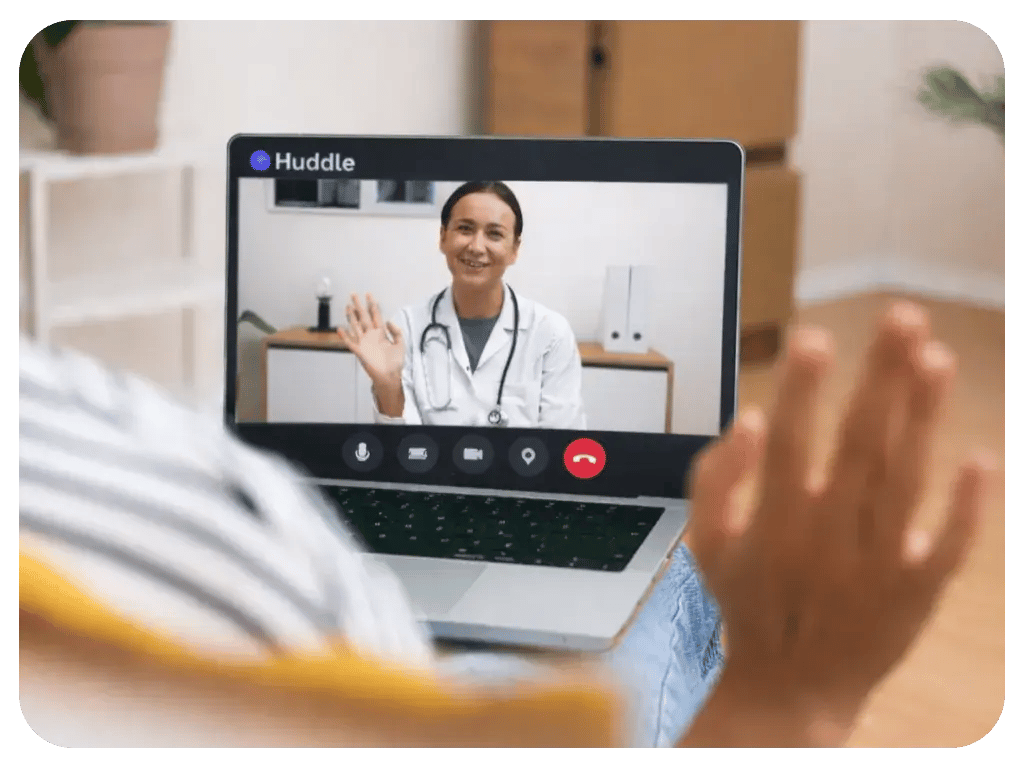
    See The Platform in Action

    Book a demo to see how net2phone handles patient calls, staff coordination, and operational visibility for healthcare practices like yours.

    Healthcare phone system CTA